

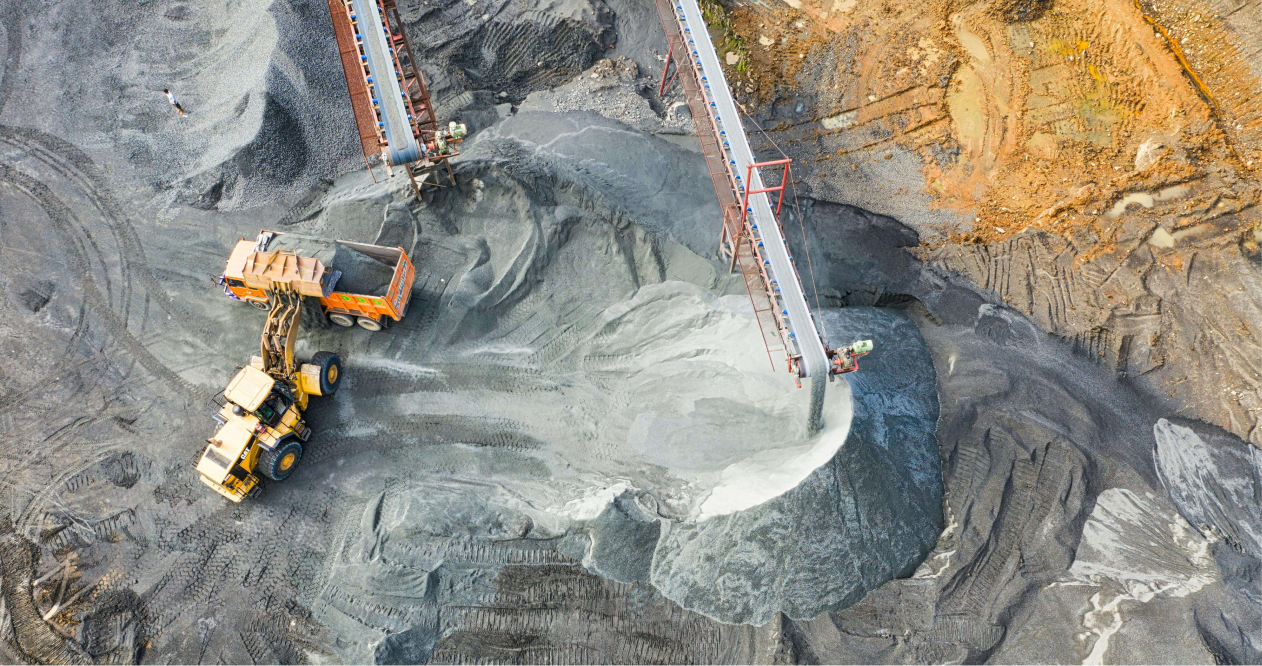

What is a small or medium mining and resources business
Contractors, service providers, and smaller extraction or processing sites that use more energy than a typical business because of plant and long hours, but do not need complex procurement.
Common examples
- Mining services, maintenance, and fabrication workshops
- Quarries and small processing plants
- Remote camps and administration hubs with HVAC and utilities
- Dewatering and pumping operations
Typical profile
Quarterly bills, time‑of‑use tariffs, and quick savings that do not disrupt production or site safety.
What is a commercial and large mining and resources operator
Large extraction, processing, and multi‑site portfolios with sustained base load, high‑duty motors, and critical services. These operators benefit from structured procurement and portfolio strategy.
Common examples
- Open‑cut and underground mines
- Large crushing, screening, and processing plants
- Port, rail, and logistics support facilities
- Multi‑site services and engineering groups
Typical profile
Monthly billing, interval metering, demand charges across sites, and procurement via tender to secure competitive rates over 1 to 5‑year terms aligned to risk appetite and contract goals.
.png)
Challenges for small and medium operators
- High equipment usage and variable loads: Pumping, ventilation, workshop plant, and changing production cycles drive peaks and shifting demand.
- Long hours and seasonal site demands: Shift work, weather, and dewatering needs lift usage and push bills higher at certain times of year.
- Remote access and limited visibility: Off‑grid or hard‑to‑reach sites make monitoring and control harder across assets.
- Contract complexity and limited time: Network fees, tariffs, and renewals are complex when teams are busy.
- Ageing equipment and inefficiency: Older motors, compressors, and lighting waste energy and increase costs.
How Zembl helps
Energy bills, Energy insights, Energy solutions: we compare and secure competitive rates, highlight usage patterns, and help implement practical fixes with minimal disruption.
Challenges for large operators
- Large machinery load management: High‑duty plant, crushers, conveyors, and processing lines create sustained and spiky demand.
- Peak demand penalties: Concurrent operation across shifts can trigger higher kW demand charges and network costs.
- Multi‑site contract alignment: Different end dates and metering setups across sites add cost and risk if misaligned.
- Limited visibility across camps: Remote camps and admin hubs make it hard to see where and when load rises.
- Specialist procurement needs: Complex tariffs, pass‑throughs, and risk structures require dedicated tendering and analysis.
How Zembl helps
Obligation‑free tenders across our retailer panel, data‑led offer analysis, and clear recommendations that fit load and risk. We coordinate onboarding and keep contracts on track.
Two recent success stories
Cutting through rising energy costs for Central Coast Smash Repairs
Specialist repair business reducing costs through expert comparison and a better‑fit energy plan.
WF Energy Controls saves 26% on energy costs through Zembl’s energy procurement
Engineering services firm achieving a 26% reduction with a structured procurement approach.
FAQs for mining and resources
Where is energy used most in mining and resource operations?
Energy is used for heavy machinery, processing equipment, pumping systems, site camps, ventilation, lighting and HVAC in operational buildings. Remote sites also rely on generators or hybrid systems that increase overall costs.
Why do mining energy costs vary so much between sites?
Usage varies due to different operational stages, ore processing requirements, equipment load, site temperature and the number of active work areas. Remote locations also face higher supply and infrastructure costs.
How can small and mid-tier mining operators reduce their energy bills?
Operators can reduce costs by reviewing tariffs, comparing plans, managing equipment schedules, improving HVAC settings in site buildings, upgrading inefficient machinery and monitoring energy use to identify high-load periods.
What drives high energy usage in large mining operations?
Large operators experience high consumption from continuous processing, large machinery, pumping systems, ventilation, refrigeration and HVAC in site camps. Running these systems concurrently increases peak demand charges.
How can multi-site mining companies improve energy efficiency?
They can align contract end dates, benchmark usage across sites, install monitoring systems, review tariffs, upgrade older equipment and use data insights to identify operational peaks. This improves both cost control and load management.
Talk to a Zembl energy expert
Whether you are a service contractor or a large operator, we align pricing, advice, and next steps to your operations and risk appetite. Share your latest bill, or recent interval data and site lists for larger portfolios, and we will get started.
.png)
.png)
.png)
.png)
.svg)

