Energy procurement

Competitive energy contracts, backed by tailored advice and ongoing analysis from energy market specialists.
Enquire today

How does commercial energy procurement work? ➔

Energy procurement is how large businesses arrange their energy contracts with commercial energy retailers to secure long-term commercial energy prices for their energy needs.

01 Discovery

We’ll begin by assessing your business’s energy requirements. This includes your electricity and gas consumption patterns, as well as any specific operational needs or constraints and renewable energy goals.

02 Market analysis

We track the energy market to understand trends, pricing structures and available suppliers, ensuring we have the most up-to-date market insights. We apply that market knowledge to specific business needs and timelines.

03 Energy tender

Sign an LOA to give us permission to speak with your energy retailer about your consumption, the prices you are paying, and your contract end dates. Zembl will go to market on your behalf to secure commercial energy prices from our retailer panel via an obligation-free tender.

04 Commercial evaluation

We identify and evaluate energy retailers based on pricing, contract terms, customer service and sustainability. We’ll request proposals or quotes from multiple retailers to compare offerings and negotiate pricing, contract terms and service level agreements.

05 Recommendation and switching

We present competitive energy offers, with recommendations tailored to your business. Once you've made your choice, we manage the switch and set your new contract in motion. We handle the process from start to finish, making the transition simple and hassle-free.

06 Ongoing account management

Once your contract starts, we'll liaise with your retailer to address any issues or disputes during contract plus assist your business in reducing its consumption and staying up to date with policy changes, incentives or market movements ahead of your contract renewal.
What happens after you sign a contract through Zembl?
Energy procurement is just the beginning. Once your energy contract begins, your dedicated account manager continues working with your business to help optimise energy performance throughout the life of your contract.
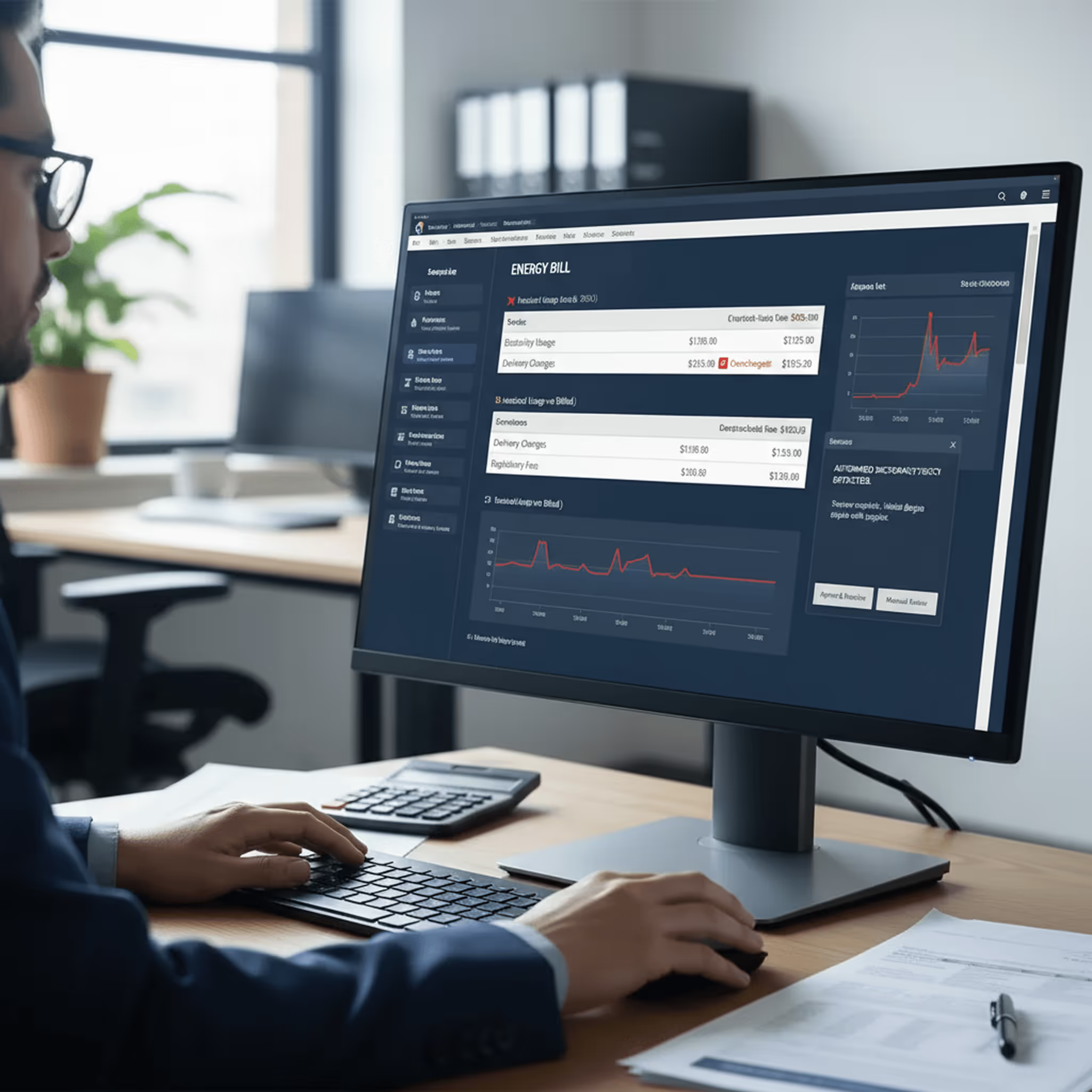
Invoice validation
Regular invoice reviews help check your pricing and identify discrepancies. If something doesn’t add up, Zembl can help resolve it on your behalf.
Network tariff review
Each year, your network tariff is reviewed to make sure it still suits how your business uses energy. Where potential savings are identified, we’ll help you take action.
Energy expense management
Stay on top of energy costs with forecasting, spend tracking, and data-led insights to support better budgeting.
Interval data
Your meter data is regularly analysed to uncover energy insights and potential efficiency opportunities for your business.
Energy efficiency action
Turn energy insights into action. Zembl Energy Experts identify suitable efficiency opportunities and help you implement them.
Dedicated account management
Get ongoing support from Zembl’s customer success team throughout your contract, with answers and help when you need it.
Zembl Energy Portal
Customer exclusive: Energy intelligence at your fingertips
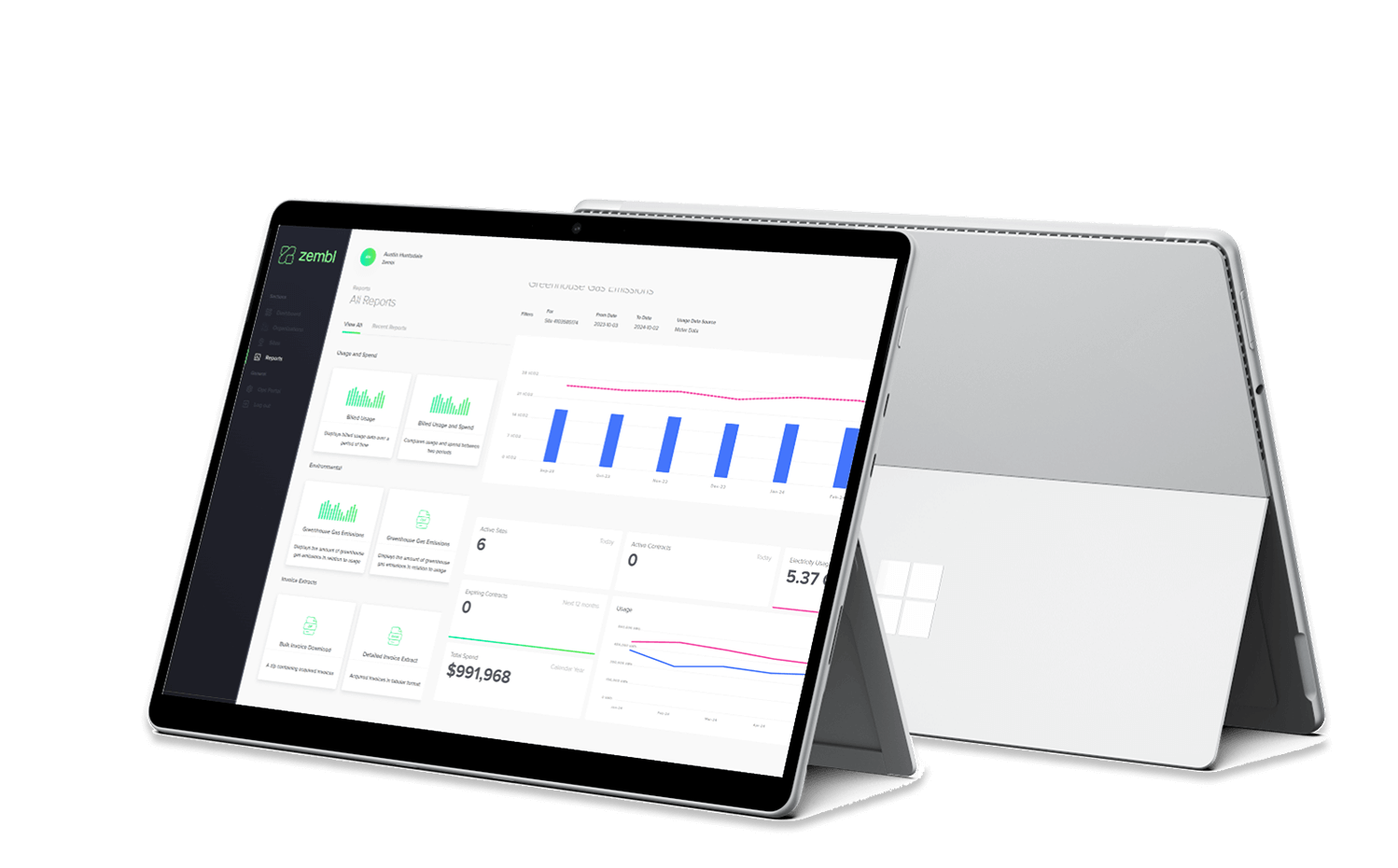
Your single source of truth for everything energy throughout the life of your contract. From energy use, cost, and performance data, the portal provides clear visibility into how your business consumes energy.
Learn more
Energy procurement case study
How Cali Press tackled rising energy costs

What are the benefits of using our energy procurement service?

We know it takes more than energy procurement alone to unlock a business’s full energy potential, so we go beyond the bill to bring you ongoing energy-saving value.

Energy expertise

Local experts with established relationships, strong negotiating power and the service to look after you long term.

Tariff performance

Competitive rates

We use our market knowledge and experience to find offers that are right for your business and market-competitive.

Efficiency opportunities

Energy portal

Automatic access to your Energy Portal for Bill Validation, annual Network Tariff Reviews and more.

Energy intelligence

Get AI-powered energy analytics to help you know more, so you can be more energy efficient.

Get started with a Zembl energy expert
Schedule a callback to discuss your commercial business energy needs
Please complete below and we’ll be in touch promptly.
Thank you! Please check your inbox for further details.
Oops! Something went wrong while submitting the form.
Currently available in NSW, ACT, SA, VIC, QLD & limited coverage in TAS & WA. Not available in NT and embedded networks.

Zembl is proud to be a signatory of the National Customer Code for Energy Brokers, Consultants and Retailers.

Zembl is proud to be a signatory of the National Customer Code for Energy Comparators & Energy Moving Services.

Small business?
Get an obligation-free energy bill comparison
Do you spend less than $30k per year on energy? For smaller businesses, we offer obligation-free business bill comparisons that take less than 10 minutes over the phone – and it we find savings we can switch you on the spot. 4 out of 5 businesses who talk to us  save significantly.
Learn more
Frequently Asked Questions
How do I know if I am classed as a small or large business by my energy consumption, and what energy market should I be in?

The small energy market for SMEs (small and medium-sized enterprises) typically includes businesses consuming under 100,000 kWh of electricity or spending less than about $3,000 monthly on energy. Bills for these customers are usually sent quarterly. Thresholds vary by state: in NSW, QLD, and ACT, the small market threshold is under 100,000 kWh per year. In Victoria, this threshold is lower, at under 40,000 kWh per year. In South Australia it is higher, at under 160,000 kWh per year.

On the other hand, the large energy market for C&I (commercial & industrial) businesses consists of those using over 100,000 kWh per year or spending more than about $3,000 a month. Thresholds vary by state: in NSW, QLD, and ACT, a C&I business is defined as one that consumes more than 100,000 kWh annually. In Victoria, this threshold is lower, at over 40,000 kWh per year. In SA, this threshold is set at over 160,000 kWh per year. Bills for large market customers are always issued monthly.

What sets small business (SME) energy customers apart from large business (C&I) customers is that large business customers can participate in, or qualify for, the wholesale energy market, enabling them to secure forward purchasing at better rates.

To figure out where you stand, simply check your energy bill. With this information, you should have no trouble determining if you've received a SME or C&I energy bill.

How often should businesses review their energy procurement contracts?

As most commercial energy procurement contracts are locked in for the full term agreed upon, businesses should review their contracts within the 12 months leading up to the end of their current agreement. This strategic timing allows for an assessment of market conditions, exploration of new pricing options, and negotiation of better terms before renewal.

By proactively managing your energy contract with Zembl's Energy Consultants, you can always stay on competitive rates and ensure your energy contract aligns with your business needs.

What are the common mistakes to avoid in commercial energy procurement?

Common mistakes in commercial energy procurement include failing to conduct thorough market research, not understanding contract terms fully, and neglecting to consider the contract term length that would be most beneficial based on market conditions. Another pitfall is delaying decision-making, which can result in missed opportunities for locking in favourable rates.

Working with Zembl's experienced Energy Consultants will help avoid these errors and ensure you're able to navigate the complex commercial energy procurement landscape with ease.

Are there government programs or incentives for commercial energy procurement?

There are no government programs or incentives for businesses directly relating to energy procurement itself, being the process of tendering and negotiating better energy rates in your contract.

There are, however, various government programs and incentives available to support energy efficiency, which in-turn should mean you use less, and ultimately pay less. These may include tax credits, grants, rebates, and subsidies aimed at promoting energy efficiency and the adoption of renewable energy sources. Businesses should explore these opportunities to reduce costs and enhance their sustainability efforts.

Whether you're a Zembl Energy Procurement customer or not, you can avail of our Energy Efficiency service, where we've partnered with trusted local experts who can provide energy efficiency solutions such as solar panels, batteries, LED lighting, heat pumps, Power Factor Correction (PFC), and energy audits. These partners are well informed about any and all available government incentives for these solutions and will be able to guide you through the process if you’re business is eligible.

What should businesses know about energy market trends and their impact on procurement?

Understanding energy market trends is critical for effective procurement. That's why Zembl's Energy Consultants have their finger on the pulse when it comes to wholesale energy prices, regulatory changes, technological advancements, and geopolitical events that can influence the energy market.

By keeping up to date with these trends, they can better predict price movements and make more informed procurement decisions, meaning Zembl customers can always secure competitive rates when renewing their commercial energy contracts.

Energy education

Simple explainers to help you understand how energy works.

View more