

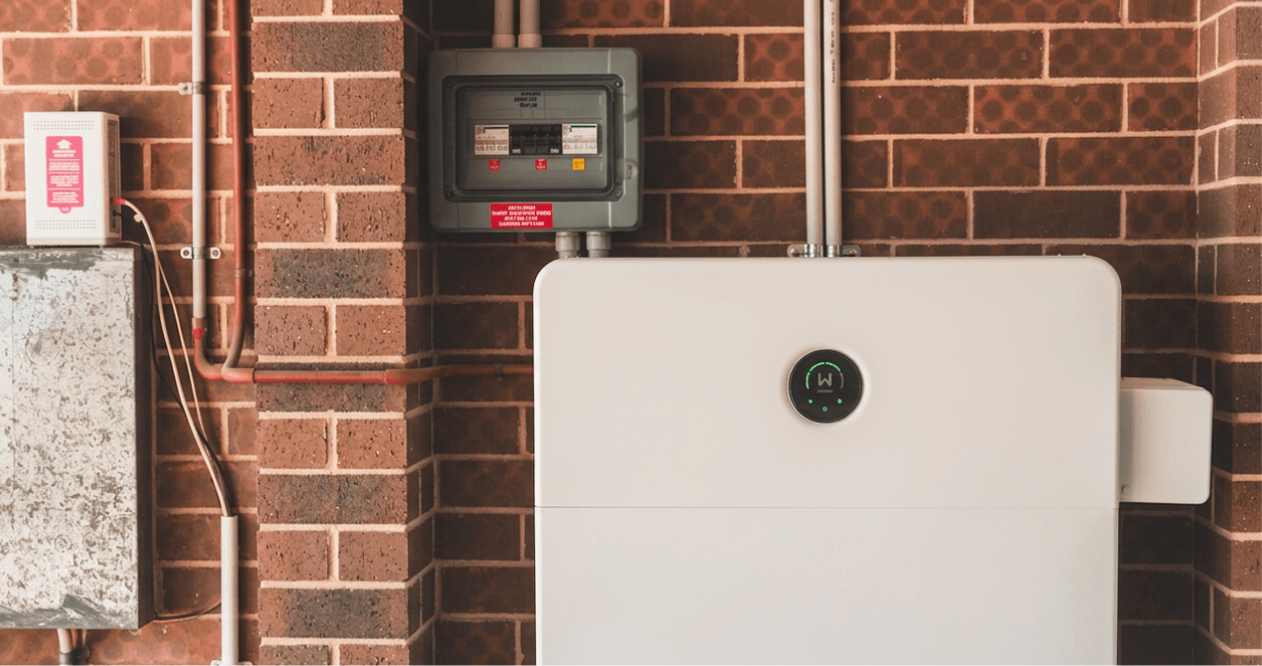

Commercial battery storage has moved from niche to mainstream fast, but a handful of myths keep coming up in conversations with large businesses weighing up whether a battery system makes sense. Here's where those myths came from, and what's actually true.
Myth one: You need solar to make a battery worthwhile
A battery doesn't need rooftop solar to pay its way. Businesses can charge from the grid when wholesale prices are low or negative and discharge when prices spike, a strategy known as energy arbitrage, and some systems also earn revenue by providing grid services such as frequency control. Solar adds another source of cheap charging, but it isn't a precondition.
Myth two: Batteries are still too expensive
Battery costs have kept falling. CSIRO's GenCost 2025-26 report put the cost reduction for large-scale battery storage at 11 to 16 per cent over 2024-25 alone. For small businesses, the federal Cheaper Home Batteries Program, running since 1 July 2025, adds a rebate worth around 25 per cent of the upfront cost on eligible systems up to 100 kilowatt-hours, with the rebate itself capped at 50 kilowatt-hours of usable capacity. Larger commercial systems sit outside that particular scheme, but the underlying hardware costs are still trending down.
Myth three: Batteries are a fire risk
Modern commercial battery systems are installed under Standards Australia's requirements (AS/NZS 5139) and Clean Energy Council guidance, and Australia's fire authorities, including AFAC and state fire services such as Fire and Rescue NSW, have developed specific guidance for commercial and industrial battery installations. Reputable installers build to these standards as a matter of course. The risk profile of a compliant, professionally installed system is well understood and managed, not a reason to rule batteries out.
Myth four: Batteries wear out fast
Commercial batteries typically come with warranties covering a decade or more of use, though the exact terms (cycle count, throughput limits, capacity retention) vary a lot by manufacturer. In practice, many systems perform beyond their warranty period. Degradation is gradual and factored into the economics from day one, not a hidden cliff edge.
Myth five: A battery automatically gives you backup power
This is one of the most common misunderstandings. A grid-connected battery configured purely for arbitrage or grid services won't keep the lights on during an outage unless it's specifically set up with the hardware and controls for backup. If blackout protection matters to your business, say so upfront: it changes the system design.
Myth six: Insurance and compliance are a headache
Cover for commercial battery systems is widely available, and reputable installers work to standardised documentation that insurers and certifiers already recognise. It's a manageable part of the project, not a reason to avoid one.
The economics and the safety case for commercial batteries have both moved a long way in a short time. If you want to know whether one stacks up for your site, talk to Zembl's energy experts about a tailored assessment.
.png)
.png)

.svg)

