

.png)

How global events can influence energy markets
Energy markets often react quickly to global uncertainty. While the long‑term impacts of the unfolding situation in the Middle East remain unclear, energy markets have already started to respond.
One place where this reaction can be seen clearly is in the ASX electricity futures market. These futures contracts are widely watched by market participants, including energy retailers, generators and traders because they reflect market expectations of future wholesale electricity prices.
Movements in the futures market often prompt retailers to adjust their hedging positions and pricing expectations as market conditions evolve.
What we can learn from previous global conflicts
The energy market has experienced similar periods of volatility during previous geopolitical disruptions. A clear example can be seen during the global energy crisis that unfolded in 2022.
On 22 February 2022, NSW electricity futures were sitting at $87.25. In the months that followed, prices climbed as global and domestic energy supply pressures intensified.
While the National Electricity Market (NEM) was already experiencing domestic supply pressures such as generator outages and tight fuel supply, the Russian invasion of Ukraine became a major driver of global energy uncertainty, pushing up coal and gas prices worldwide.
As these pressures built, futures prices continued to rise. By 10 October 2022, NSW futures had reached $267.54.
This represented a 206.6% increase over 230 days, with other states across the NEM experiencing similar trends.
Importantly, the increase did not occur overnight. Prices rose gradually over several months as markets adjusted to ongoing uncertainty around global fuel supplies and domestic generation availability.
This historical example illustrates how prolonged geopolitical and supply-side disruptions can influence energy markets. When uncertainty persists, market participants often price additional risk into futures contracts, which can lead to sustained periods of volatility.
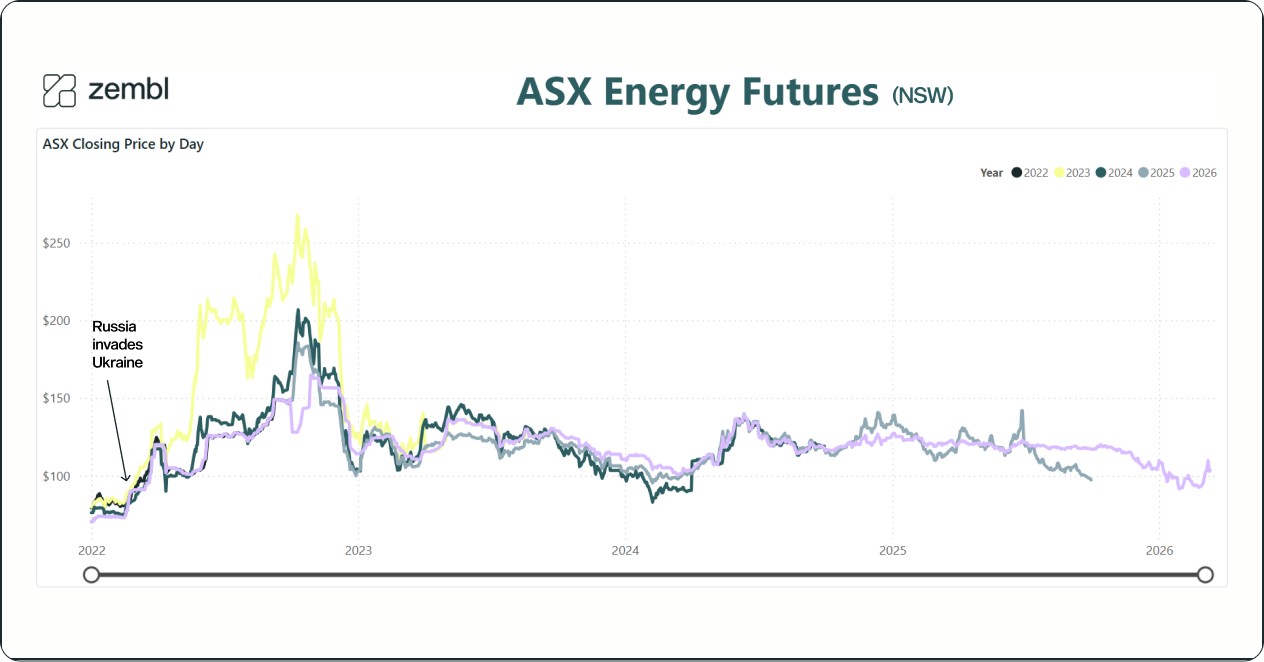
Source: ASX Energy Futures, NSW, 2022-2026
What we have seen in the futures market so far
The data referenced in this article was pulled on 13/03/2026. For comparison, prices from the same date in the previous year (13/03/2025) were also reviewed to understand how current futures levels compare year‑on‑year.
Over the past year, energy futures prices across the National Electricity Market (NEM) have moved significantly, easing from the peaks seen during the early stages of the Ukraine conflict. While recent weeks have seen noticeable increases and a return of heightened volatility, futures market prices across most states remain lower than they were at this time last year.
Below is a snapshot of recent movements across the major states.
Market disclaimer: Wholesale electricity prices are subject to change and can move quickly in response to weather, outages, fuel availability, and regulatory developments. Current pricing levels do not guarantee future outcomes.
All pricing data referenced in this section is sourced from ASX Energy futures charts (asxenergy.com.au). Data was pulled on 13 March 2026 and compared with prices from the same date in 2025.
NSW futures market
- Price on 13/03/2025: $120.69
Recent data shows NSW futures prices rising sharply before easing slightly.
- Recent peak: $109.73
- Current level: $103.70
- Recent low: $92.47
While prices have pulled back from the peak, they remain higher than earlier lows. However, current levels are still lower than the same time last year.
.png)
Source: ASX Energy Futures, NSW, March 2025 – March 2026
QLD futures market
- Price on 13/03/2025: $102.72
Queensland futures prices have followed a similar pattern.
- Recent peak: $83.27
- Current level: $79.33
- Recent low: $73.23
Despite recent volatility, prices remain significantly lower than the same time last year.
.png)
Source: ASX Energy Futures, QLD, March 2025 – March 2026
SA futures market
- Price on 13/03/2025: $95.65
South Australia has seen a more pronounced increase in recent weeks.
- Recent peak: $102.92
- Current level: $102.92
- Recent low: $88.44
Prices in South Australia are currently sitting near recent highs and are roughly in line with levels seen around the same time last year.
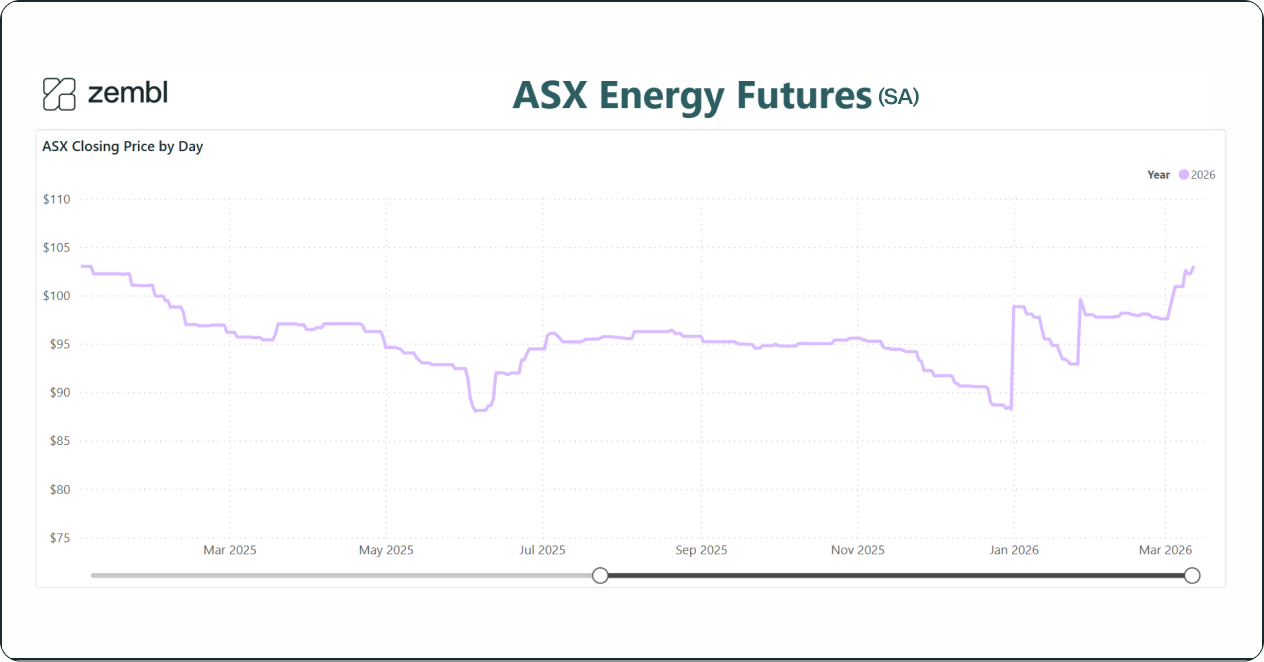
Source: ASX Energy Futures, SA, March 2025 – March 2026
VIC futures market
- Price on 13/03/2025: $76.15
Victoria experienced earlier volatility this year before prices eased.
- Recent peak (January): $84.26
- Current level: $76.22
- Recent low: $70.58
Although prices have dropped from earlier highs, they remain above the lowest levels seen earlier in the year.
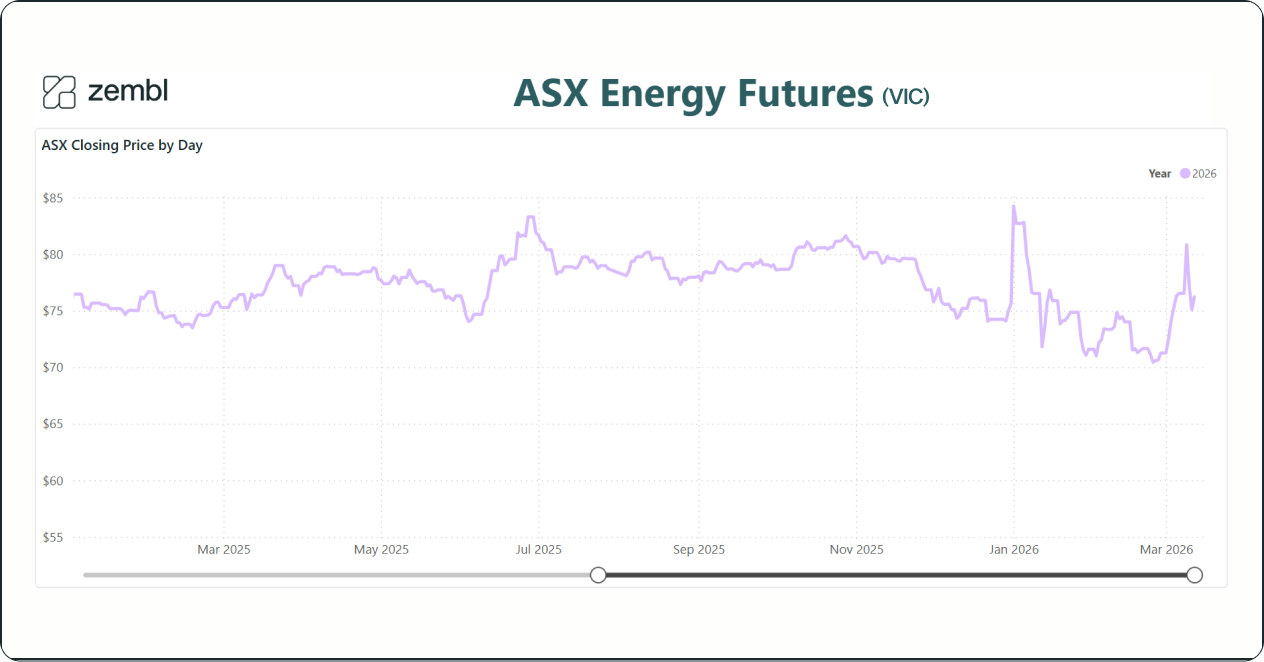
Source: ASX Energy Futures, VIC, March 2025 – March 2026
How Zembl is viewing the market
From our perspective, the recent movements in futures prices are not just theoretical. In the past week we have already begun seeing early responses from parts of the retail market.
Some retailers have already adjusted market offers to reflect updated wholesale cost and risk margins.
This type of response is common during periods of market uncertainty. Retailers actively manage wholesale price risk, and when forward markets move quickly, pricing teams may pause, review or update offers while assessing where the market may settle.
The key takeaway is not that prices will necessarily continue rising, but that volatility has returned to the market. When volatility increases, retailers often widen risk margins or become more cautious with offer releases until pricing stabilises.
For businesses approaching contract renewal, this can sometimes mean shorter quote validity periods or more frequent pricing updates while the market adjusts.
What businesses can do during uncertain market conditions
Periods of market volatility do not necessarily mean prices will continue rising. Futures markets can move quickly in both directions as new information enters the market.
However, businesses approaching contract renewal may benefit from monitoring conditions closely and reviewing their options.
Some practical steps businesses can consider include:
- Reviewing upcoming contract expiry dates
- Monitoring wholesale market trends
- Understanding their tariff structure and usage patterns
- Speaking with an energy expert before making procurement decisions
Taking a proactive approach can help businesses avoid reactive decisions during periods of rapid market movement.
How Zembl helps businesses navigate market changes
Zembl monitors wholesale markets to help businesses understand how market conditions may affect energy pricing.
Whether a business is approaching contract renewal, reviewing tariff structures, or exploring new procurement options, a Zembl Energy Expert can help assess available options and explain how current market conditions may influence pricing.
Clear advice and market insight can help businesses make more confident decisions, even during periods of uncertainty.
.png)
.png)


.png)
.svg)

