

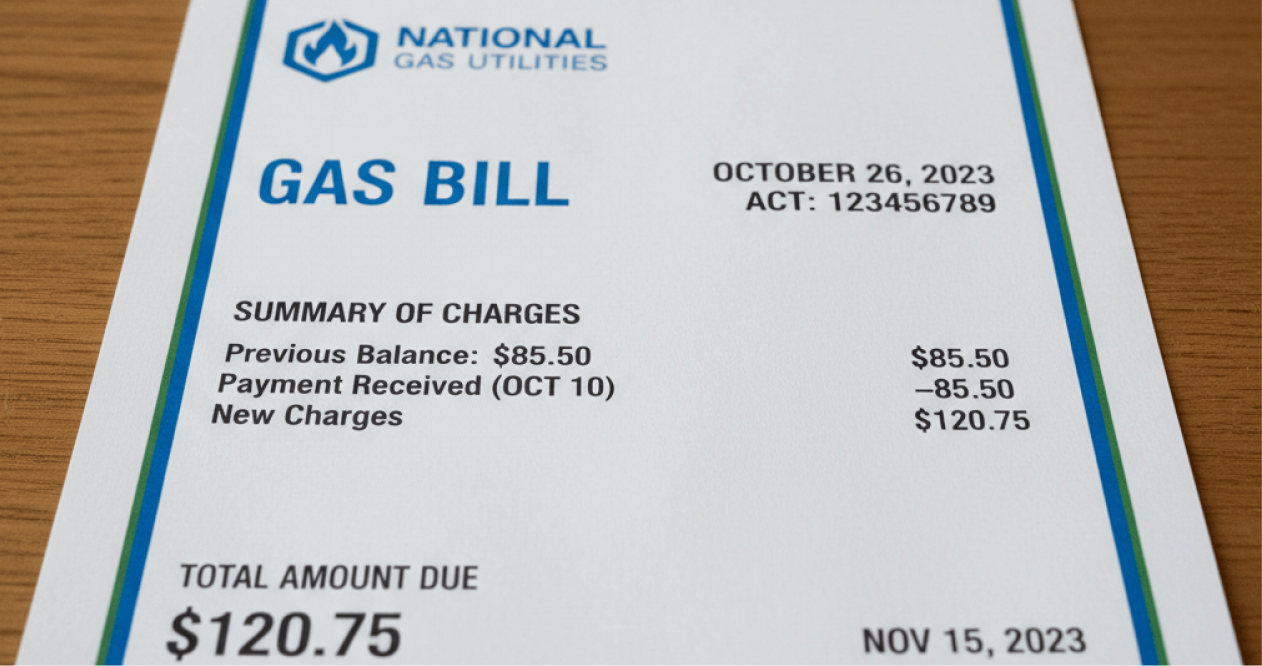

Understanding the average gas bill in Australia helps household and small businesses budget with confidence and avoid surprises when bills arrive. Gas remains a common energy source for cooking, hot water, and heating, especially in southern states. But what you pay each month can vary widely depending on where you’re located, how many people are in your home or business, and how you use gas.
This guide breaks down the gas bill average across Australia, explains the average gas bill per month by household or business size, and looks closely at regional differences such as the average gas bill Melbourne households and businesses typically face. You will also learn how to calculate your own costs, reduce usage without sacrificing comfort, and decide whether switching providers could deliver better value.
Understanding your gas bill
Before comparing averages, it helps to understand what makes up a gas bill. Most Australian gas bills include two main components:
- A daily supply charge, a fixed amount you pay to stay connected to the gas network.
- A usage charge, based on how much gas you consume for heating, cooking, and hot water.
The supply charge is a fixed daily amount you pay to stay connected to the gas network, regardless of usage. The usage charge is measured in megajoules (MJ) and reflects how much gas you actually use for heating, cooking, or hot water.
Other items may include:
- Metering fees
- Late payment fees
- Government concessions, if you are eligible While usage attracts the most attention, the daily supply charge can make up a significant portion of a smaller household or business gas bill average.
.png)
Average gas bill in Australia: A state-by-state breakdown
The average gas bill in Australia differs by state due to climate, network costs, and access to natural gas infrastructure. Colder states typically see higher usage due to space heating needs.
In Victoria, where gas heating is common, the average gas bill in Melbourne's household and businesses pay is often higher than the national average. Many Victorian homes rely on gas for both heating and hot water, pushing winter bills up sharply.
New South Wales household and businesses generally see moderate gas costs, particularly in coastal areas where winters are milder. South Australia often records higher supply charges, while Queensland gas bills are usually lower due to less reliance on gas heating.
As a broad guide, the average gas bill per month across Australia often falls between $80 and $140 when gas is primarily used for space heating and basic hot water in a typical household or small business premises. Where gas is also used as part of small business operations, such as cooking, food production, or process heating, gas bills can vary widely depending on equipment, operating hours, and peak usage, particularly in winter months in southern states.
Factors influencing gas bills
Several factors shape what you pay, even compared to similar household and businesses. The most common include:
- Climate and local weather conditions
- Household size and occupancy patterns
- Appliance efficiency and age
- Home insulation and draught sealing
- Daily habits such as heating settings and shower length climate play a major role.
- Homes in colder regions naturally consume more gas for heating.
Household size is another key driver. The average gas bill for a 2-person household is usually lower than for larger families, but fixed supply charges mean the difference is not always proportional.
Appliance efficiency, insulation quality, and behaviour also matter. Older heaters, poorly insulated homes, or long shower times can all increase the gas bill average without household or businesses realising where the extra cost comes from.
How to calculate your monthly gas bill
Calculating your own average gas bill per month starts with understanding your usage. Check a recent bill and note your total usage in MJ for the billing period.
Divide this figure by the number of days in the billing cycle, then multiply by 30 to estimate monthly usage. Apply your usage rate per MJ, then add the daily supply charge multiplied by 30.
For example, if you use 3,000 MJ over 90 days, that equates to around 1,000 MJ per month. At $0.03 per MJ, usage would cost $30. Add a daily supply charge of $1.00, or $30 per month, and your estimated gas bill average becomes $60 per month outside peak heating season.
.png)
Tips to reduce your gas bill
Reducing your gas bill starts with managing heating, as it is usually the largest contributor. Practical steps include:
- Setting heaters to around 18 to 20°C in winter
- Heating only occupied rooms
- Closing doors and curtains to retain warmth Setting heaters to around 18 to 20°C in winter can significantly cut usage without reducing comfort.
Hot water is another major driver. To reduce costs:
- Take shorter showers
- Install efficient showerheads
- Check hot water system temperature settings
- Shorter showers, efficient showerheads, and lowering hot water system temperatures can all reduce consumption.
Simple habits matter too:
- Use lids on pots when cooking
- Maintain heaters and hot water systems
- Seal gaps and draughts around doors and windows
Maintaining appliances and sealing drafts can lower the average gas bill without any major investment.
Comparing gas prices across providers
Gas prices vary widely between providers, even within the same network. Differences in usage rates, supply charges, and contract terms all affect the gas bill average.
When comparing offers, look beyond discounts and focus on:
- Usage rates in cents per MJ
- Daily supply charges
- Contract length and exit conditions
- Any additional fees such as a plan with a lower usage rate but higher supply charge may suit larger household or businesses better than smaller ones.
Always compare on a like for like basis using your actual usage, not just headline rates. This is the most reliable way to understand which plan delivers genuine value.
Seasonal variations in gas usage
Gas usage is highly seasonal, particularly in southern Australia. Winter heating can double or even triple monthly gas consumption compared to summer.
This means the average gas bill per month across a year can look reasonable, while individual winter bills feel very high. Planning for this seasonal spike is key to avoiding bill shock.
Some household and businesses choose to smooth cash flow by setting aside extra during summer or using bill smoothing options offered by retailers.
.png)
Energy-efficient appliances and their impact
Upgrading old gas heaters or hot water systems can have a significant impact on the gas bill average. Modern systems use less gas to deliver the same level of comfort.
High-efficiency heaters, instantaneous hot water systems, and well-maintained appliances reduce wasted energy. While upgrades involve upfront cost, they often pay for themselves over time through lower bills.
Pairing efficient appliances with good insulation and draught sealing further reduces heating demand and ongoing gas costs.
How to switch gas suppliers for better rates
Switching gas providers in Australia is generally straightforward. Once you choose a new plan, the new retailer handles the transfer, and there is no interruption to supply.
Before switching, gather:
- A recent gas bill
- Your usage in MJ
- Current supply charge
- Contract end date
- This ensures accurate comparisons and avoids moving onto a rollover rate.
Many households and businesses find switching worthwhile, particularly if they have been on the same plan for several years without review.
Common questions about gas bills answered
Gas bills often raise similar questions across household and businesses. Understanding the drivers behind costs helps you make informed decisions rather than reacting to the latest invoice.
The sections below address the most common questions Australians ask about the gas bill average and how to manage it effectively.
How Zembl can help
If you want clarity on your average gas bill and whether you are paying more than you need to, Zembl can help. We compare your current gas pricing with competitive options available from our trusted retailer panel.
For small businesses and households, we keep the process simple. Share a recent bill and we will explain your usage, identify where costs are coming from, and outline clear next steps. If switching makes sense, we coordinate the change, so you do not have to chase forms or retailers.
The result is confidence, clarity, and a gas plan that fits how you actually use energy.
FAQs
Why do gas bills vary between states?
Gas bills vary due to climate, network costs, and how widely gas is used. Colder states use more gas for heating, while supply charges and infrastructure costs differ by network.
How can I reduce my monthly gas bill?
Focus on heating efficiency, manage hot water usage, maintain appliances, and review your plan regularly. Small changes add up over time.
What factors influence the cost of my gas bill?
Key factors include household or business size, appliance efficiency, climate, usage habits, and the rates and supply charges on your plan.
Is it worth switching gas providers to save money?
For many households and businesses, yes. Especially if your plan is nearing expiry or you have not compared options recently.
How does the size of my household or business affect my gas bill?
Larger households and businesses generally use more gas, but fixed supply charges mean the increase is not always proportional. The average gas bill for a 2-person household or business is often only modestly lower than for three people.
.png)
.png)
.png)

.png)
.svg)

