

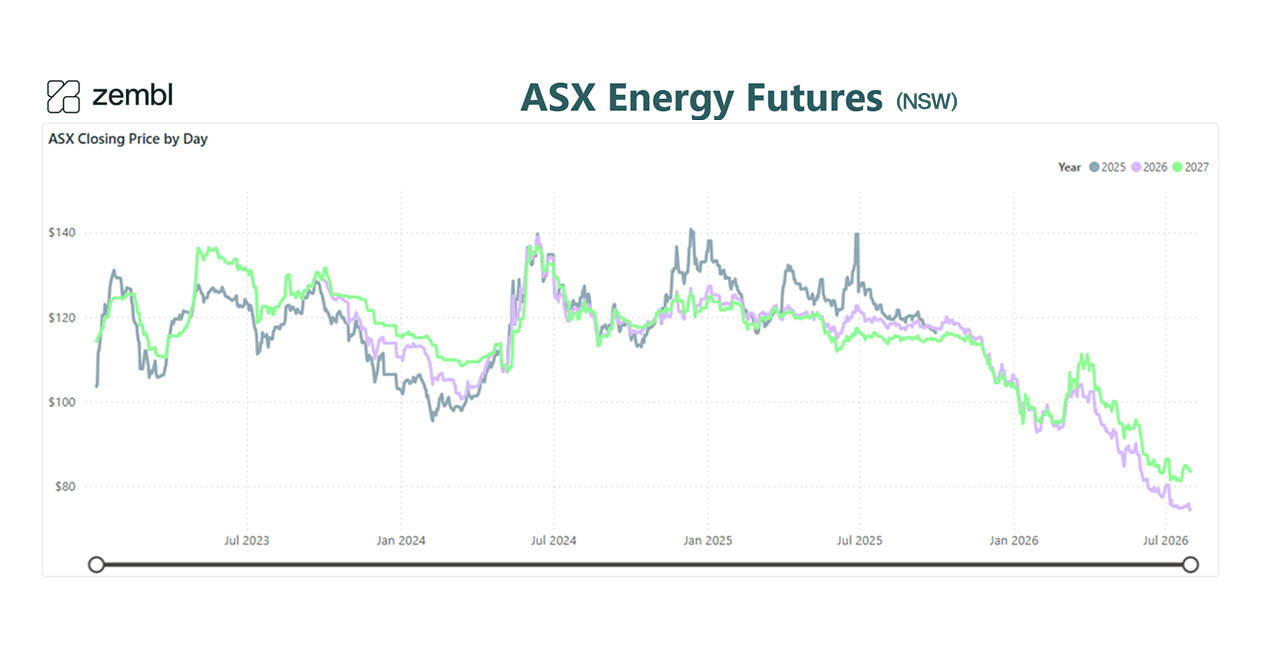

Mid-winter arrived in July, yet wholesale electricity futures across NSW suggested its bite may not materialise. 2026 futures prices retreated from $79.64 at the start of the month to $74.44 by month end¹, continuing the downward trend established earlier in the year. Meanwhile, 2027 contracts eased from $85.64 to $83.43, though by a smaller margin compared to 2026. This is telling: the market expects electricity will be cheaper in 2026, while anticipating tighter supply and potential upward pressure on pricing heading into 2027.
Why July's price action puzzles
The winter months typically correlate with peak heating demand, but July 2026 delivered mixed signals. Solar generation in the NEM jumped 37%² from June, which is unusual for winter. Batteries were able to soak up cheap solar power during the day, then discharged during the higher priced evening peak, so despite the colder weather and increased demand prices still kept falling.
What's happening in the NEM
Battery storage continues to reshape how the market functions by capturing cheap electricity during periods of low demand, then discharge it during expensive peak periods. As a result, the spread between cheap off-peak and expensive peak-time pricing is narrowing. NSW prices ran slightly higher compared to the NEM and other states, though the gap is narrowing. South Australia saw several price spikes in late June, a reminder that state-level supply challenges persist even as the national picture improves.
What to watch
Next 3 months: August and September will be pivotal months for the market. A genuine cold snap would see gas-fired generation dispatched more heavily, likely pushing electricity prices higher. Conversely, if mild conditions persist, prices may continue to soften.
The relative pricing between contract years is also telling: 2027 contracts have not fallen as sharply as 2026, suggesting the market is pricing in cheaper energy through 2026, but anticipating tighter conditions and higher prices heading into 2027. This spread could narrow or reverse quickly if supply-side risks materialise.
Next 6 months: More battery storage is expected to come online (another 5-8 GW by year end), which may help contain peak prices. The government's Solar Sharer Offer (for homes only, not businesses) could mean more residential solar panels on rooftops, which adds another source of daytime power the grid needs to manage.
Meanwhile, businesses will be able to benefit from announced changes to the Small-scale Renewables Energy Scheme (SRES). Solar systems installed from 1st October 2026 with a total onsite capacity between 100 kilowatts (kW) and 1 megawatt (MW) will now be eligible to create small-scale technology certificates (STCs). Prior to the change solar systems 100 kW+ could only generate large-scale generation certificates (LGCs) 3.
Next 12 months: Network tariff (the charge for using the poles and wires that deliver electricity to you) reform is coming but remains uncertain. If pricing changes so that consumers pay more during busy times and less during quiet times, it could change how and when businesses use electricity 4.
The takeaway
July reinforced the picture that has been building throughout 2026: electricity is cheaper compared to 2025. Prices have fallen month-on-month, batteries are assisting with managing peak periods and unseasonal warm weather has resulted in increased renewable generation.
If your electricity contract is coming up for renewal, now is a good time to start looking at your options. Whilst every business is different market timing matters. Zembl can help you understand what's happening in the market, so get in touch to see how we can assist your business with your electricity agreements.
Sources
- ASX Energy Futures (NSW) closing price data, July 2026: https://www.asxenergy.com.au/
- PV Tech - NEM Data Spotlight: Combined solar generation rebounds 37% in July 2026: https://www.pv-tech.org/
- CER - Expansion of solar photovoltaic (PV) eligibility under the Small-scale Renewable Energy Scheme: https://cer.gov.au/news-and-media/news/2026/august/expansion-solar-photovoltaic-pv-eligibility-under-small-scale-renewable-energy-scheme
- AER - Cost-reflective network tariff reform roadmap 2026: https://www.aer.gov.au/
.png)
.png)
.png)
.png)

.svg)

